Choosing 5kW EV On-board Converters in 2026 is not simply a matter of matching a power rating. The right unit must fit the vehicle’s battery voltage, charging interface, thermal limits, and available installation space. A converter that looks suitable on a datasheet may behave differently after hours of charging beside a warm battery pack. Small details matter: connector placement, cooling paths, control compatibility, and service access can shape real-world performance.
A useful expert perspective comes from Professor Chris Mi, an established researcher in electric-vehicle power electronics: “A converter’s value depends on how well its efficiency, thermal design, and controls work together.” This is a practical selection principle, not a substitute for checking a product’s documented specifications. Compare continuous output with peak claims, review efficiency across likely operating loads, and ask how the manufacturer validates temperature performance. Request clear test conditions. Vague claims deserve scrutiny.
This guide outlines the questions buyers should ask before selecting 5kW EV On-board Converters for a 2026 project. It covers system fit, efficiency, thermal management, reliability evidence, and supplier support. The perfect specification may not exist. A careful decision still can: start with the vehicle’s actual requirements, verify every critical interface, and leave room to challenge assumptions before purchase.
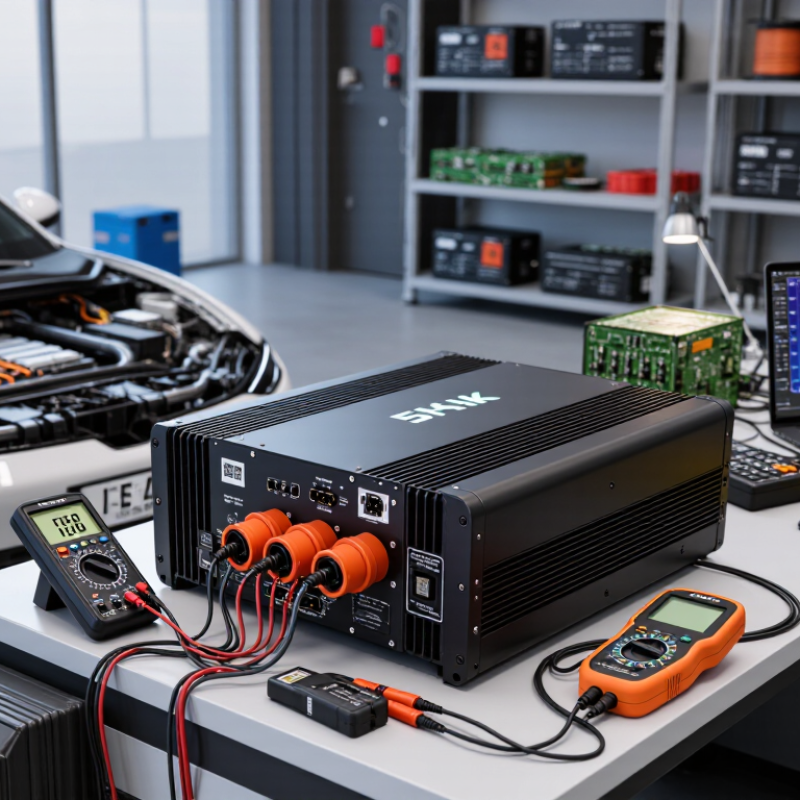
A 5 kW EV onboard converter is the vehicle’s link between an AC charging outlet and its high-voltage battery. It rectifies incoming AC power into controlled DC, while monitoring voltage, current, and temperature. In many designs, it also provides electrical isolation and helps maintain safe charging conditions. The converter does not create extra energy; it sets a practical ceiling on how quickly the vehicle can charge from AC.
The rating is easier to understand with a real number. A 60 kWh battery would need about 12 hours at a steady 5 kW, before charging losses and power limits. Actual time varies with battery temperature, state of charge, and the supply available. The U.S. Department of Energy’s Alternative Fuels Data Center lists Level 2 charging equipment across roughly 3.3–19.2 kW, placing 5 kW within a familiar range. A rating alone can mislead.
This component matters as EV use expands. The International Energy Agency reported nearly 14 million electric-car sales worldwide in 2023, about 18% of all car sales. That growth makes efficient, thermally robust onboard conversion more consequential. Look beyond peak output: check continuous power, efficiency across common loads, cooling needs, and compatibility with the vehicle’s battery voltage. Small details matter. A 5 kW unit may be a sensible match for overnight charging, but only if the vehicle and electrical supply can use it well.
A 5 kW rating describes the converter’s nominal power capacity; efficiency across the operating range also matters. The chart shows a representative efficiency profile for a 5 kW converter. Values are illustrative engineering reference points, not measurements for a specific product.
When comparing converters, check the full-load output, vehicle-side voltage range, efficiency at typical driving loads, cooling requirements, and thermal derating. Confirm that the unit meets the vehicle’s electrical and safety requirements.
A 5 kW onboard DC-DC converter must fit the vehicle’s actual high-voltage battery and low-voltage bus—not just its power rating. Check the battery’s minimum, nominal, and maximum voltage against the converter’s full input range, including charging and regenerative conditions. On the output side, 5 kW means about 357 amps at 14 volts, but roughly 104 amps at 48 volts. Voltage matters. Confirm that cables, fuses, connectors, and the vehicle’s distribution hardware can carry the required current continuously. The IEA’s Global EV Outlook 2025 projects more than 20 million electric-car sales in 2025, underlining how widely vehicle architectures can vary.
Match control and protection functions, too. Verify galvanic isolation requirements, CAN communication, startup sequencing, fault reporting, and compatibility with the vehicle’s thermal-management system. Ask for continuous-power ratings at the expected coolant temperature, not only peak figures at ideal conditions. A spec sheet can look complete and still omit derating details. Check it cold. Then check performance after heat soak. NREL’s vehicle-electrification research highlights the importance of evaluating components within integrated vehicle systems; bench power alone cannot confirm reliable operation. Before selection, compare the converter’s operating limits with the vehicle maker’s electrical interface documentation, and validate behavior under real load profiles. I would not assume a nominal 12-volt system behaves identically across models.
Choosing a 5 kW onboard converter means balancing topology, efficiency, cooling, and package size. A common architecture pairs a power-factor-correction stage with an isolated DC-DC stage. LLC resonant designs can reduce switching losses, while other isolated topologies may offer broader operating flexibility. There is no universal winner. The International Energy Agency’s Global EV Outlook 2024 reports nearly 14 million electric cars sold in 2023, about 18% of global car sales. That growth makes compact, dependable conversion hardware increasingly important.
Compare efficiency across the actual load range, not only at peak power. A converter may perform well at full output but run hotter during lower-power charging. Check measured losses, thermal limits, and cooling requirements together. Liquid cold plates can support tight packaging, but add hoses and service complexity. Forced air is simpler, though airflow paths need space. Thermal margin matters. It is easy to underestimate heat around connectors and nearby components.
Tips: Ask suppliers for efficiency curves, temperature-rise results, and dimensions including connectors and coolant fittings. Confirm whether tests reflect your input voltage and enclosure. Leave room for cables, insulation, and airflow; drawings can make a package look deceptively neat. A small layout compromise may be acceptable, but verify it with a thermal test.
When choosing a 5 kW EV onboard converter in 2026, check safety evidence before comparing price or size. Ask for test reports and certificates that identify the exact model, hardware revision, and applicable standards. Requirements can vary by destination market, so confirm the current rules with a qualified compliance specialist. A certificate for a similar unit is not enough.
Inspect the protection features in practical terms. The converter should address overvoltage, overcurrent, short circuits, overheating, and electrical isolation. Review how faults are detected and what happens next: does charging stop safely, and can the fault be diagnosed? Check thermal test conditions, too. A unit that performs well in a cool lab may behave differently near a warm battery enclosure. Details matter.
Tips: Request the compliance documents, installation limits, and test conditions in writing. Compare connector, voltage, cooling, and communication requirements with the vehicle design. Confirm electromagnetic compatibility evidence for the intended configuration. Keep revision records. They help during audits and service. A checklist can still miss a detail; review the final installation, not just the converter paperwork.
For a 5 kW onboard converter, evaluate evidence for the exact hardware and firmware revision, not just a family-level brochure. Ask for test conditions and pass criteria. Reports should cover thermal cycling, vibration, humidity, electrical isolation, electromagnetic compatibility, and overload response. Request efficiency curves across input voltage and load, plus derating limits. A lab pass is not a lifetime guarantee.
Supplier support matters after installation.
The IEA’s Global EV Outlook 2025 reports that electric-car sales exceeded 17 million in 2024, representing more than one-fifth of global new-car sales.
That growing installed base makes repair turnaround and traceable parts important. Ask how quickly the supplier investigates field failures, stocks service components, and notifies customers about design changes. Get clear escalation contacts, firmware-support periods, and failure-analysis timelines in writing.
Check reliability practices, not only warranty length. Look for documented production screening, serial-level traceability, and corrective-action reports from comparable power-electronics products. Ask whether test samples came from production tooling; prototype results can look reassuring. Small details matter. A supplier may have strong test data but limited repair capacity. That gap deserves a candid discussion before qualification.
It changes incoming AC electricity into controlled DC for the high-voltage battery. It also monitors voltage, current, and temperature. It cannot create extra energy.
At a steady 5 kW, the rough estimate is 12 hours. Charging losses, battery temperature, and power limits can extend that time. Real conditions vary.
No. The vehicle, electrical supply, battery state, and temperature all affect performance. A rating alone can mislead.
Compare its full input-voltage range with the battery’s minimum, nominal, and maximum voltages. Check the low-voltage bus, too. Voltage matters.
At 5 kW, output current is about 357 amps at 14 volts, or 104 amps at 48 volts. Cables, fuses, and connectors must handle the required current continuously. That detail is easy to miss.
Check isolation needs, communication, startup sequencing, fault reporting, and thermal-management compatibility. Confirm continuous-power ratings at expected coolant temperatures. Peak figures are not enough.
Liquid cooling can fit tight spaces, but adds hoses and service needs. Forced air is simpler, though it needs clear airflow paths. Heat near connectors deserves attention.
Ask for efficiency curves, temperature-rise results, and dimensions with connectors and coolant fittings. Confirm tests match your voltage and enclosure. I would still want a real-load thermal test.
Choosing 5kW EV On-board Converters in 2026 starts with understanding their role: they convert external AC power into the DC energy needed to charge a vehicle’s battery. Buyers should first confirm that the converter’s input range, output voltage and current, charging performance, and communication interfaces match the vehicle’s electrical system. Compatibility with the battery and charging setup is essential for dependable operation.
Next, compare converter topologies, efficiency, thermal management, size, weight, and installation requirements. Evaluate safety certifications and protection features such as overvoltage, overcurrent, overheating, and short-circuit safeguards, while confirming that the product meets applicable requirements for the intended market. Finally, review supplier documentation, testing procedures, technical support, warranty terms, and reliability data. A well-matched converter that is thoroughly tested and supported can help maintain efficient charging and consistent performance throughout the vehicle’s service life.