
0%

Choosing Commercial Transportation OBC Solutions requires more than comparing charging power and purchase prices. A reliable onboard charger must fit the vehicle, depot, battery system, and daily operating schedule. A city bus returning with a warm battery needs different priorities from a delivery van charging overnight. Voltage range, connector compatibility, cooling design, enclosure protection, and communication protocols all deserve careful review.

Start with real operating conditions. Record route length, parking duration, ambient temperatures, and available grid capacity. Then match the charger’s output to the battery pack and charging window. A 22 kW unit may suit overnight depot charging, while a higher-output option could reduce turnaround time. However, greater power may increase thermal stress, installation costs, and demand charges. More power is not always better.

Ask suppliers for documented test results, service procedures, warranty terms, and field references from comparable fleets. Check how the OBC communicates with the battery management system and vehicle control unit. Confirm fault handling, diagnostic access, software update support, and spare-part availability. A product can look excellent on paper. Real deployment may reveal limitations.

Do not overlook installation details. Cable routing, airflow, moisture exposure, vibration, and technician access affect long-term reliability. Independent certification and traceable quality processes add confidence, but they do not replace practical validation. A pilot vehicle should operate through representative routes and charging cycles before fleet-wide adoption. Some assumptions will be wrong. Good decisions leave room to measure, question, and improve them.
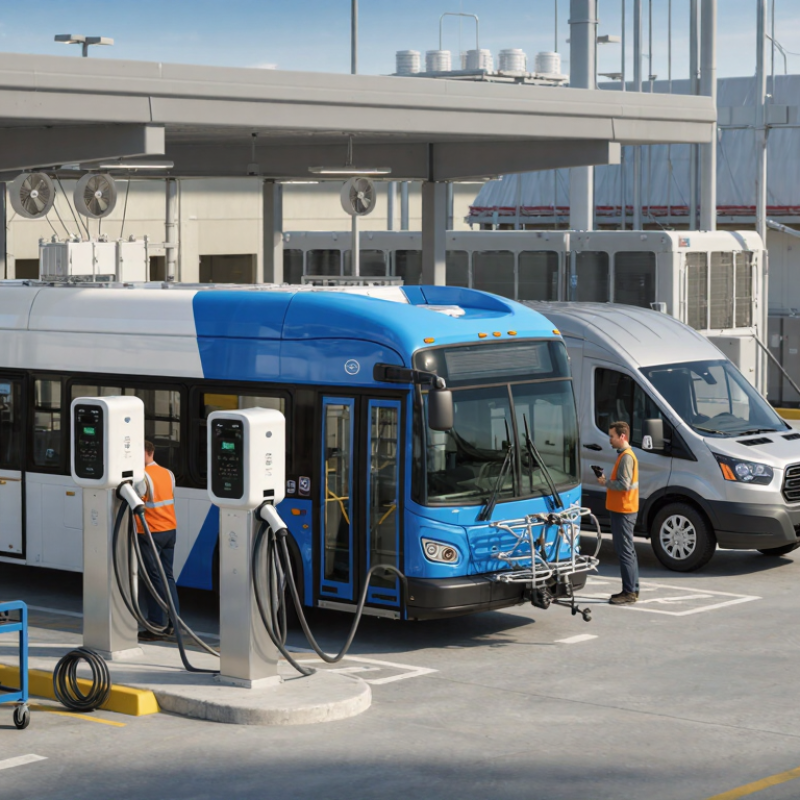
How to Choose Commercial Transportation OBC Solutions

Define Commercial Transportation OBC Requirements and Use Cases

An onboard charger (OBC) converts AC power into controlled DC energy for a commercial vehicle battery. Commercial requirements begin with the route, not the charger specification. A city bus may need high daily energy throughput, while a delivery van may prioritize compact size and overnight charging. Define battery voltage, required charging power, available grid capacity, and operating hours. Routes differ. Measure the stops.

A useful use-case review examines depot charging, roadside charging, and mixed schedules. Record dwell time at each location, including loading delays and winter heating demands. The OBC should support stable communication with the vehicle control system, accurate fault reporting, and safe power reduction during thermal stress. Protection against dust, moisture, vibration, and repeated cable connection is equally important. These details often decide uptime.

Our first energy estimate is rarely perfect. Payload, traffic, weather, and battery aging can change the result. That uncertainty deserves a margin, but excessive margin may increase cost and weight. Compare real route data with controlled pilot tests before fixing the specification. Check service access, diagnostic procedures, and replacement time. A technically efficient OBC can still fail commercially if technicians cannot inspect it quickly. Select equipment against applicable regional safety requirements and the fleet’s documented operating conditions.

How to Choose Commercial Transportation OBC Solutions

Define the onboard charger requirement by matching vehicle duty cycle, available AC infrastructure, charging dwell time, battery capacity, and fleet operating schedule.

The chart shows representative AC onboard charger power targets commonly used in commercial vehicle design: lower ratings suit overnight depot charging, while higher ratings support shorter dwell times for regional and high-utilization operations. Actual selection should be validated against grid capacity, battery voltage, thermal limits, charging standards, and route energy demand.

Compare OBC Power Ratings, Charging Standards, and Vehicle Compatibility

Choosing a commercial transportation OBC solution starts with matching power to daily route demands, not brochure claims. Measure battery voltage, usable capacity, dwell time, and charging windows. A 22 kW unit may suit overnight depot parking, while a lower-rated OBC can support lighter-duty vehicles. Higher power is not automatically better. It may require heavier cabling, stronger thermal management, and costly site upgrades. Review efficiency across realistic temperatures, because laboratory figures can mislead fleet planners.

Charging standards determine whether the vehicle connects reliably to its intended infrastructure. Confirm connector type, communication protocol, voltage range, current limits, and isolation requirements before purchasing. AC equipment and the vehicle’s onboard charger must exchange control signals correctly. A physical fit is not enough. Ask suppliers for compatibility records, test procedures, firmware support, and fault logs. Field testing often reveals small communication gaps that delay commissioning. An early estimate can be wrong, so challenge it with route data and pilot testing.

Tips: Build a compatibility matrix for every vehicle and charger. Record rated power, usable power, charging time, and operating temperature. Test the OBC during peak depot demand, not only in ideal conditions. Check whether charging performance changes at low battery temperatures. Leave practical headroom for aging batteries and unexpected route extensions. Also verify service access, replacement time, and diagnostic visibility. These details often matter more than a higher headline rating.

Evaluate Safety, Efficiency, Durability, and Thermal Management

How to Choose Commercial Transportation OBC Solutions

Evaluate Safety, Efficiency, Durability, and Thermal Management

Commercial fleets need more than a high power rating. The International Energy Agency’s Global EV Outlook 2024 reported that electric truck sales nearly quadrupled in 2023, although the starting base was small. This growth increases pressure on onboard chargers to perform safely during repeated depot charging. Check compliance evidence against ISO 26262 and IEC 61851. Review isolation monitoring, overvoltage protection, moisture resistance, and fault-response time. A smooth datasheet is not enough.

Efficiency directly affects operating cost and battery temperature. Compare full-load efficiency, partial-load efficiency, standby consumption, and power-factor performance. A charger that reaches 96% efficiency can waste less energy than one operating near 92%. The difference becomes meaningful across thousands of charging hours. The U.S. Department of Energy highlights energy efficiency as a major factor in vehicle operating economics. Still, efficiency figures may reflect laboratory conditions, not winter routes or dusty depots.

Thermal management deserves physical inspection. Look for temperature sensors near switching devices, capacitors, connectors, and cooling channels. Liquid cooling can support compact designs, but pumps and seals add maintenance points. Air cooling is simpler, yet clogged filters can reduce output. Ask for thermal derating curves at 40°C and above. Field teams should review service records, vibration testing, salt exposure, and connector wear. I would also test recovery after repeated charging cycles. Real duty cycles are rarely perfect. That is the uncomfortable part.

Assess Installation, Maintenance, Software, and Fleet Integration

Choosing a commercial transportation OBC solution starts with depot reality. Measure parking angles, cable reach, power capacity, and winter exposure before selecting hardware. The International Energy Agency’s Global EV Outlook 2024 reports more than four million public charging points worldwide in 2023. That growth increases options, but it also raises installation complexity. A charger may fit the vehicle yet fail the site. Leave space for ventilation, drainage, and safe technician access. Installation drawings should show conduit routes, isolation points, and future expansion capacity.

Maintenance planning deserves equal attention. Review cooling systems, connectors, insulation checks, and replacement intervals. Keep spare components near the depot when downtime affects scheduled routes. The U.S. National Renewable Energy Laboratory’s 2024 charging infrastructure trends report tracks continued expansion across public charging networks. More equipment means more service data to manage. Software should record charging faults, energy use, temperature events, and firmware status. It should also provide clear permissions and audit logs. Cybersecurity cannot be treated as an optional upgrade. That assumption can be costly.

Tips: Test one vehicle and one route first. Compare charging time, energy use, and fault recovery during real shifts. Ask technicians to perform routine tasks, not engineers alone. Connect OBC data with dispatch, maintenance, and energy systems through open interfaces. A perfect specification rarely survives the first depot trial. Leave room to revise it.

Select OBC Solutions by Total Cost, Scalability, and Supplier Support

How to Choose Commercial Transportation OBC Solutions

Selecting an onboard charger requires more than comparing purchase prices. Total cost includes installation, cooling, cabling, energy losses, maintenance, and vehicle downtime. A lower-priced unit may demand costly depot upgrades or frequent service visits. Ask suppliers for documented efficiency data, warranty limits, replacement procedures, and testing conditions. Real operating details matter, especially during cold mornings and high summer temperatures.

Scalability should match your fleet roadmap. A charger must support planned battery voltages, charging standards, and future vehicle models. Modular designs can simplify expansion, but only when modules remain compatible and serviceable. Review installation space, connector access, communication protocols, and software update methods. In fleet evaluations, a spreadsheet often misses driver behavior and uneven depot usage. That gap deserves attention.

Tips: Test one unit in a working depot before placing a large order. Measure charging time, heat, noise, error frequency, and technician workload. Ask the supplier how quickly technical staff respond, where spare parts are stored, and who handles field failures. Request clear manuals and training for maintenance teams. Strong support is practical, not promotional. It should include traceable service records, realistic response targets, and useful troubleshooting guidance. A supplier may promise scalability, yet weak documentation can slow every deployment. Review references from operators with similar routes, climates, and daily mileage. Be willing to revise the selection after pilot data exposes an overlooked cost.

FAQS

What should determine a commercial vehicle OBC specification?

Start with the route, not the charger rating. Measure battery voltage, charging power, grid capacity, and operating hours. Stops matter.

How do depot and roadside charging needs differ?

Depot charging usually allows longer dwell times. Roadside charging demands faster energy delivery and stronger thermal control. Mixed schedules need flexible planning.

Which operating details should fleet managers record?

Record loading delays, winter heating, payload, traffic, and daily mileage. These details change actual energy demand. Clean estimates can still mislead.

What safety features should an OBC include?

Review isolation monitoring, overvoltage protection, moisture resistance, and rapid fault reporting. Check evidence against applicable safety standards. A datasheet is not proof.

How does efficiency affect fleet operating costs?

Compare full-load efficiency, partial-load efficiency, standby use, and power-factor performance. Small losses become significant after thousands of charging hours.

What thermal management issues deserve attention?

Inspect sensors near switching devices, capacitors, connectors, and cooling paths. Request derating curves at 40°C and higher. Heat changes everything.

How should durability be tested?

Review vibration tests, salt exposure, dust resistance, moisture protection, and connector wear. Repeat charging cycles under realistic conditions. Real routes are messy.

What should total cost include?

Include installation, cooling, cabling, energy losses, maintenance, and vehicle downtime. A cheaper unit may require expensive depot upgrades.

Why is a pilot test important before large deployment?

Test one unit at a working depot. Measure charging time, heat, noise, errors, and technician workload. Pilot results may challenge the original plan.

How can a fleet evaluate supplier support?

Ask about spare parts, replacement time, manuals, training, and technical response targets. Strong support needs traceable records. Promises alone are insufficient.

Conclusion

Choosing the right Commercial Transportation OBC Solutions begins with clearly defining vehicle types, daily operating routes, charging schedules, battery capacity, and fleet use cases. Buyers should compare output power ratings, charging standards, voltage requirements, and compatibility with each vehicle platform to ensure reliable and efficient energy delivery. The selected system should also provide strong electrical safety, high conversion efficiency, durable construction, and effective thermal management for demanding operating conditions.

Beyond basic performance, fleet operators should evaluate installation complexity, maintenance access, software capabilities, diagnostics, and integration with fleet management or energy management systems. Remote monitoring, data reporting, and upgrade flexibility can improve uptime and simplify long-term operations. Finally, selection should be based on total cost of ownership, including equipment, installation, energy efficiency, maintenance, and potential expansion. A scalable solution supported by responsive technical service, clear documentation, spare parts availability, and consistent product development can help transportation fleets achieve dependable charging performance and sustainable growth.

Ethan

Ethan

Ethan is a dedicated marketing professional with a strong understanding of the company’s products, customers, and industry landscape. Through a combination of market research, strategic planning, and clear communication, he helps present complex product information in a practical and engaging way.......